The place · Attractions

Trikala, Ziria and the monuments of a mountain

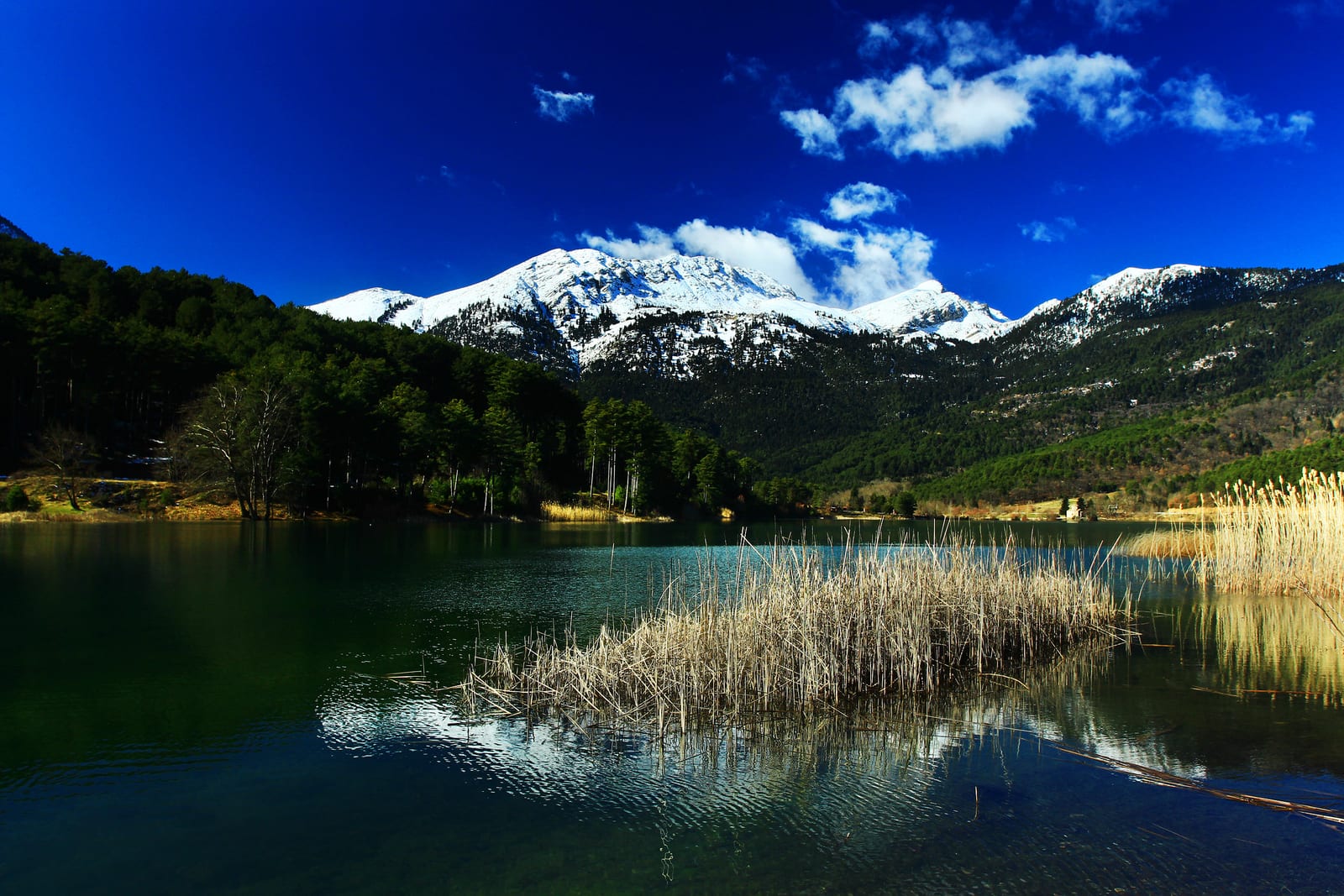
Forty minutes above the sea of Xylokastro spreads another world: stone mansions, monasteries from the 1400s and the 1700s, an alpine lake at 1,480 metres and the cave where, legend says, Hermes was born.

The route

From the wave to 900 metres

Xylokastro is 120 kilometres from Athens and 90 from Patras, yet its most beautiful drive begins where the motorway ends. Just past the town, heading towards Patras, you turn left and follow the signs for Trikala Korinthias, 24 kilometres of climbing among picturesque villages such as Riza, Pellene, Rethi and Dendro.

Trikala is the largest of the villages on the eastern side of Ziria and one of the oldest and best-loved centres of mountain holidaymaking in Greece. Its three neighbourhoods, Kato (Lower), Mesaia (Middle) and Ano (Upper), climb to altitudes of 900, 1,000 and 1,100 metres. The village took the place of ancient Mysaion in the 10th century, when the people of the lowlands, driven out by the raiders of the time, climbed up to build in a clean and healthy spot.

Each neighbourhood keeps something of its own: in Kato Trikala the church of Agios Dimitrios of 1697, in Mesaia the Monastery of the Panagia of 1700, and in Ano the stone and timber mansions and the churches of the 16th to 18th centuries. Among them stand out the mansion of the Notaras family (only ruins survive today) and the church of Agios Nikolaos with its old wall paintings, which local tradition traces back as far as the 10th century.

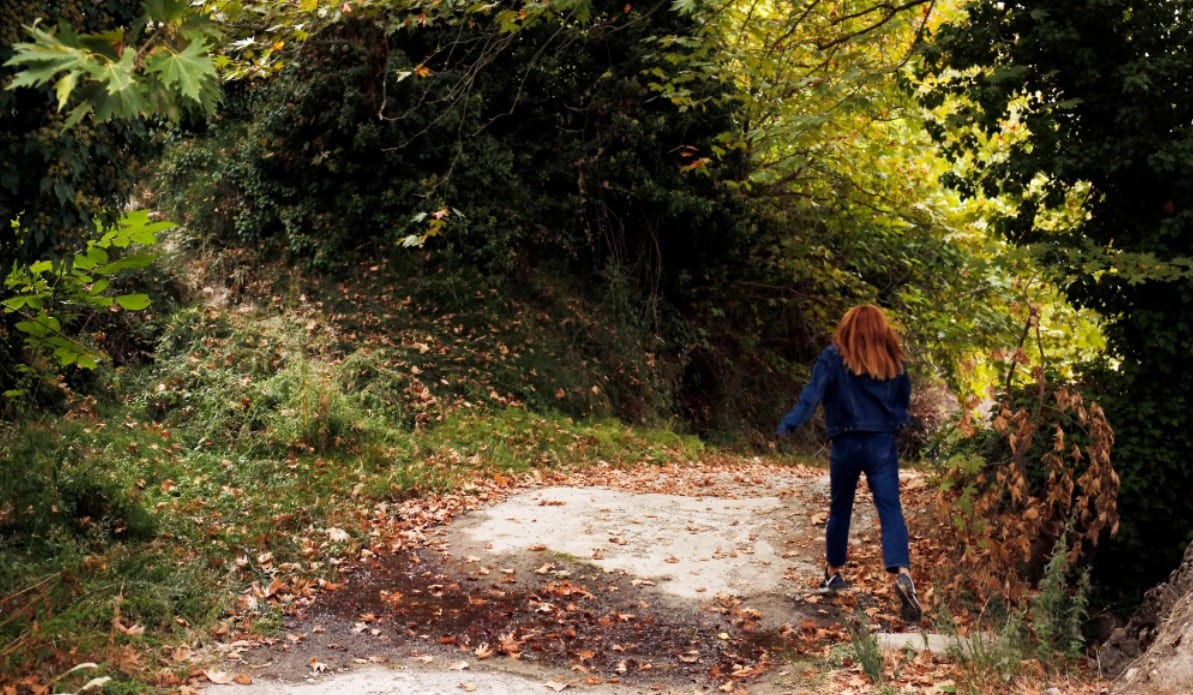
Autumn path in Trikala Korinthias

How to get thereTrikala is about 40 to 45 minutes from Xylokastro, by the 24-kilometre southern mountain road.Directions on Google Maps

Eight stops

Everything worth seeing, in the order you meet it

01

Kato Trikala · 1697

The church of Agios Dimitrios

In the Lower Neighbourhood of Trikala, the church of Agios Dimitrios was built in 1697 and is the first great monument you meet on the way up. Its most unusual feature is the 18th-century wall painting, strongly expressionist in character and style, rare for a church of the period. Among them is the celebrated "Akra Tapeinosis" (the Man of Sorrows), which alone justifies the stop.

How to get thereIn Kato Trikala, about 40 minutes from Xylokastro by the southern mountain road.Directions on Google Maps
02

Mesaia Trikala · 1700

The Monastery of the Panagia

In Mesaia Trikala stands the Monastery of the Panagia, built in 1700 by Gregorios Notaras, Metropolitan of Corinth, by the family that gave the mountain most of its monuments. It sits on the walk between the two neighbourhoods.

How to get thereIn Mesaia Trikala, about 40 to 45 minutes from Xylokastro.Directions on Google Maps

03

Ano Trikala

The Tower of the Notaras family

In Ano Trikala the renowned Tower of the Notaras family still stands, the house where Saint Gerasimos Notaras was born. The family played a significant part in the Orlov Revolt of 1770, in the Revolution of 1821 and in the civil war that followed. The tower remains the most tangible sign of its presence in the village.

How to get thereIn Ano Trikala, about 45 minutes from Xylokastro.Directions on Google Maps

04

10 km from Ano Trikala · Ziria plateau

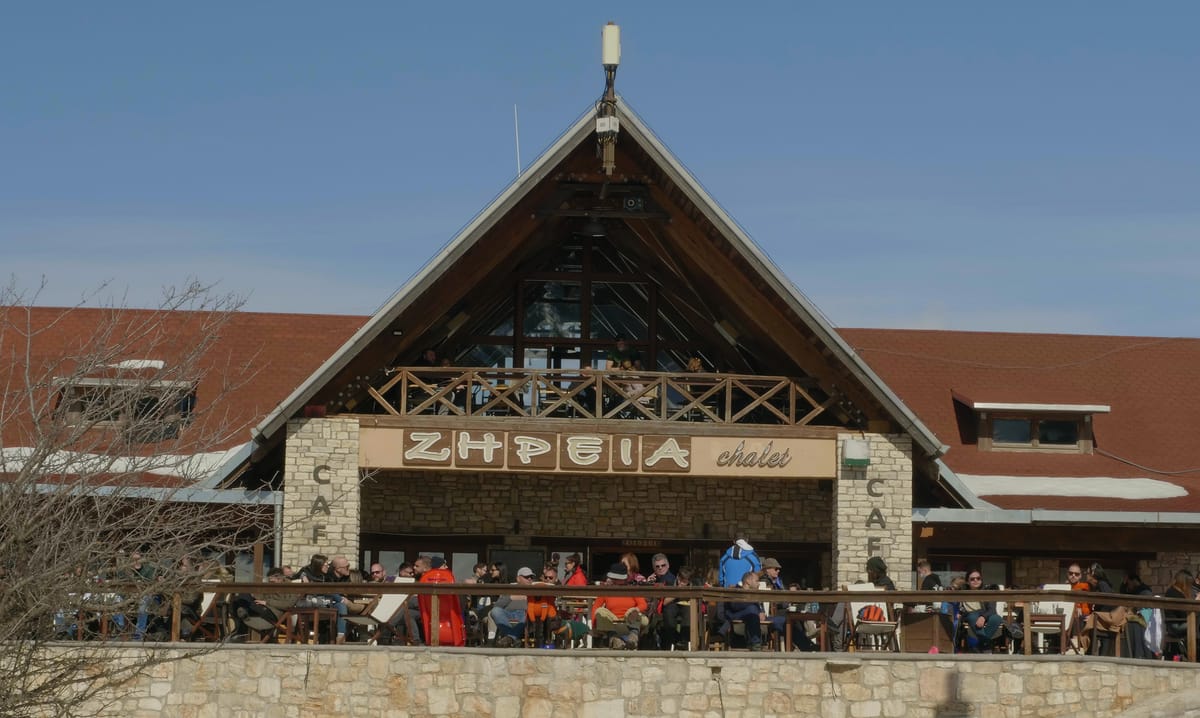
The chalet of the Ziria ski centre full of people

The Ziria Ski Centre

Ten kilometres above Ano Trikala, the Ziria Athletic Ski Centre has been running since 2007. It has a 100-metre baby-lift slope with a dedicated instructor for young skiers and a larger 700-metre slope served by a platter lift. The necessary equipment can be rented on site.

On the Ziria plateau many visitors rent snowmobiles or ATVs, or try cross-country skiing, on long touring routes over light snow. And when it is time for a break, the wooden chalet serves coffee, a drink or a cold dish every day, with a view over the whole plateau.

How to get thereAbout 45 to 60 minutes from Xylokastro via Trikala. It operates in winter, depending on the snow, since 2007.Directions on Google Maps

05

Altitude 1,480 m · 10 minutes from the ski centre

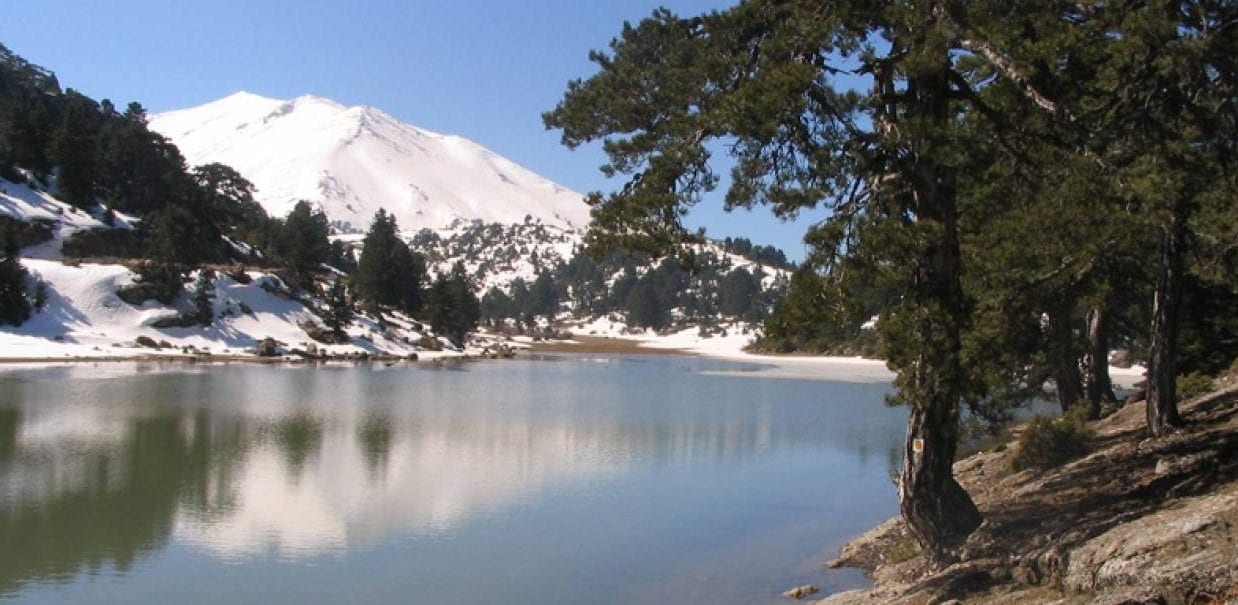
Snow-covered Ziria above the alpine lake

Lake Dasiou

Ten minutes from the ski centre, on the north-western foothills of Kyllene and at an altitude of 1,480 metres, Lake Dasiou is perhaps the most photographed corner of the mountain. Around it, the flora and fauna of Ziria in all their range: firs, oaks, violets, mushrooms and wildflowers, along with rare birds of prey, hares, weasels, foxes, and even wild horses and cattle grazing freely.

How to get thereAbout 40 minutes from Xylokastro, via Trikala and the plateau.Directions on Google Maps

06

Just past Ano Trikala · around 1400

The Monastery of Agios Vlasios

Tradition says the monastery was built around 1400, when the miraculous icon of Agios Vlasios was found in a nearby cave. During the years of Ottoman rule it served as a spiritual and religious centre for the area. You will find it just past Ano Trikala.

Two small tips: in the garden at the back of the monastery, the nuns hand out loukoumia (Turkish delight) generously. And from the path that leads down to a natural spring, shout out whatever you like, the echo always answers back.

How to get thereJust past Ano Trikala, about 45 to 50 minutes from Xylokastro.Directions on Google Maps

07

Lesser and Greater Ziria · Natura 2000

Snow-covered Ziria reflected in a mountain lake

The valley of Flabouritsa

Between Lesser and Greater Ziria spreads the valley of Flabouritsa, included together with Mount Kyllene in the Natura 2000 network as an area of special interest in need of protection. The path across it runs between streams and centuries-old trees and ends at the springs of the river Sythas.

How to get thereBy road to the Ziria plateau via Trikala, about 45 to 60 minutes from Xylokastro, and from there on foot.Directions on Google Maps

08

Altitude 1,750 m · western Flabouritsa

The Cave of Hermes

According to mythology, deep within this cave Hermes was born, son of Zeus and Maia, one of the seven Pleiades, whose father was Atlas and mother Pleione. Here too grew the magic herb "moly", which Hermes gave to Odysseus to protect him from the sorceress Circe.

The cave lies on the western side of Flabouritsa, at an altitude of 1,750 metres. It covers 1,200 square metres and branches into 8 chambers full of clusters of stalactites and stalagmites. If you want to explore it, you will need the right gear: a torch, a rope and clothes for caving.

How to get thereReached only on foot from the Ziria refuge. Gear is required.Directions to the refuge

And then?

What you can do up there

Hiking to the summit, horse riding at Rethi, 4x4 routes on the plateau. See what you can do along the same drive.

All the activities →